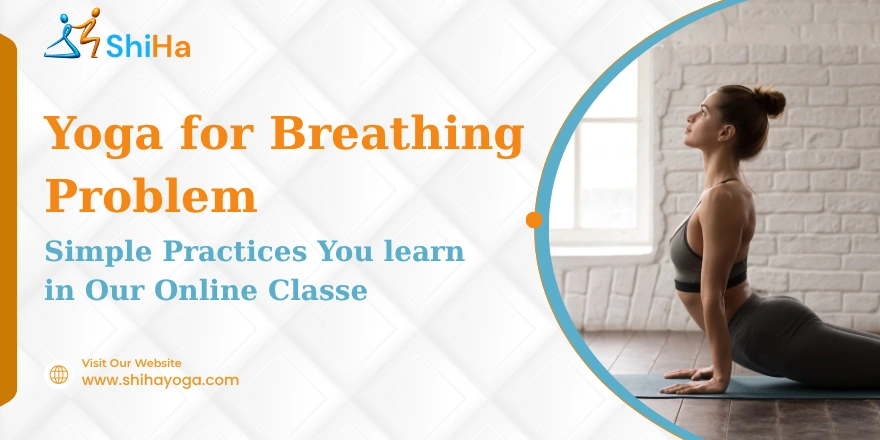
Yoga for Breathing Problem: Simple Practices You learn in Our Online Classes
Is it difficult to breathe with little movements such as walking quickly or climbing stairs? Stress, pollution, or asthma can cause this in many people these days. The good news is, yoga for breathing problem can help you breathe easier, without any medicine or equipment.
In this blog, we will explain in very simple words which yoga poses and breathing exercises can help you, and how our online classes teach them the right way.
What Causes Breathing Problems and How Yoga Helps
Some breathing issue can occur for various reasons – stress, lung weakness, pollution, asthma, or just too much sitting. If breathing is shallow the body does not receive an adequate amount of oxygen, and this will make one feel tired and weak.
Yoga breathing exercises are helpful because they affect breathing, make it easier to exhale, and allow the lungs and chest to expand. Slow, deep breathing increases oxygen supply, quietens the nervous system and lowers stress, a common trigger of breathing difficulty.
Which yoga is best for breathing problems?
It's a very frequently asked question by our students! The reality is that there is no 'best' pose, it is actually best to combine gentle stretches with breathing exercises.
Pranayama: The Core of Breathing Yoga
When people ask which yoga is best for breathing problem, pranayama breathing is usually the answer. These simple breathing exercises train your lungs to take in more air and let it out slowly. Some easy ones to start with:
- Anulom Vilom (Alternate Nostril Breathing) – Balances both sides of the lungs and clears blocked airways.
- Bhramari (Humming Bee Breath) – Calms the mind and slows down fast breathing.
- Ujjayi Breath – This breath, known as “ocean breath", enlarges the capacity of lungs over time.
Gentle Asanas That Support Breathing
Some light poses open the chest, allowing for more space in the lungs, in addition to pranayama. These poses are simple, easy to master and do not require any special skill to do these poses.
Yoga Asanas for Breathing Problems You Can Try at Home
These are very easy yoga asanas to execute that can help cure breathing ailments, easily at home without any equipment at hand.
Bhujangasana (Cobra Pose)
This pose gently stretches the chest and shoulders, helping the lungs expand more fully. Bhujangasana is one of the simplest yoga asanas for breathing problems and is safe for most beginners. Learn the right steps and hold it slowly, so your breath stays calm.
Ustrasana (Camel Pose)
Ustrasana massages chest region to open it up and enhance posture making it easier and deeper to breathe. Even having the first few rounds, our students experience almost instant relief in their chest.
Dhanurasana (Bow Pose)
This pose stretches the front body and brings oxygen to the whole front body. Not easy like the other two, so try it slowly if you are a beginner.
Setu Bandhasana (Bridge Pose)
A soft backbend will open chest without excessive tension. A suitable position for the unskilled starter to begin with.
Best Yoga for Breathing Problem: A Simple Daily Routine
When you find it hard to get started here's the best yoga for breathing problem - a short daily practice:
- Slowly start with 5 minutes of deep breathing to help relax the body.
- Practise anulom vilom for 5 minutes.
- Step into Bhujangasana, and hold for 20 - 30 seconds.
- Try Ustrasana for another 20-30 seconds.
- End with Bhramari breathing for 3-5 minutes to calm the mind.
This is one complete workout that takes 15-20 minutes each day, but if performed consistently, it will make a huge difference in just a few weeks.
Common Mistakes People Make While Practicing Breathing Yoga
Many beginners make minor mistakes that hinder them even with their correct poses. The yoga breathing problems can be improved with the knowledge of these.
- Breathing too fast – Rushing through pranayama reduces its calming effect. Always keep the breath slow and steady.
- Warm up – not distributing warm up of the body before jumping to poses can strain chest and/or shoulders.
- Practicing in a closed, stuffy room – fresh air makes a big difference. An unobstructed open room with the air freshens the lungs.
- Giving up too early – Breathing problems take time to improve. Numerous people give up after a couple of days without any results, but that's yoga and as such, it requires patience.
- Ignoring posture – Slouching while sitting or standing reduces lung space. Being tall, even during yoga, helps you breathe properly throughout the day.
Lifestyle Habits That Support Your Yoga Practice
Apart from yoga asanas to help the breathing, there are some habits that accelerate your progress:
- To keep the airways moist and clear, drink enough water.
- Avoid smoking or staying in smoky, polluted areas.
- Get sleep on time; lack of sleep will weaken lungs overtime
- Use a light, fresh food that doesn't bloat or become heavy.
- Have brief air walks, particularly in the early morning.
All these minimal adjustments and practices help to enhance this best yoga for breathing problem routine even more with regular practice.
Why Yoga Works Better Than Quick Fixes
Yoga is not the same as those quick solutions, which build the strength of the lungs fast and unnaturally, rather it strengthens them slowly and naturally. Unlike quick fixes, yoga for breathing problem resolves the root of the problem by teaching the body to take deep, soothing breaths daily.
Tips to Practice Yoga for Breathing Problems Safely
- Always practice on an empty stomach, or wait 2-3 hours after a meal.
- Take things slow — do not do deep breaths if you are dizzy.
- Practice in a clean room with fresh air for oxygen or outdoors.
- If you have asthma or any serious lung condition, consult your doctor first.
- Be consistent — 10 minutes a day is better than 1 prolonged session weekly.
Those who wish to discover yoga in undisturbed and natural surroundings can also take our Rishikesh yoga retreats with mild adventurous trips which can make the mind free from tensions while mastering proper breathing techniques.
Final Thoughts
Breathing issues don't have to take over your life. Over time, you can strengthen your lungs to breathe easier and feel calmer with a few minutes of daily yoga breathing practices and the right yoga breathing exercises. Learn these techniques step by step and have the correct direction from the start with our online classes.