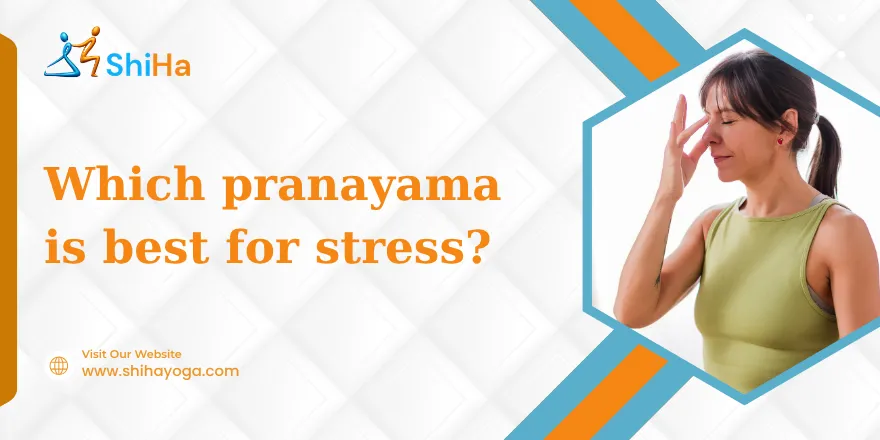
Which pranayama is best for stress?
Stress can busy up your mind, fatigue your body and even shorten your breath. Daily stress has been accumulated because of work, studies, family affairs, insufficient sleep and the excessive use of screen devices.
The great news is that your breath can be a straightforward procedure to assist you in feeling calmer. The very slow and controlled breathing in pranayama in stress creates a relaxed state.
But which pranayama is best for stress?
Nadi Shodhan Pranayama works well for most amateurs, as it helps develop slow and peaceful breathing. If the mind is not at ease, then bhramari pranayama is another efficient choice. Sheetali Pranayama may also be used to help relax. When one becomes hot due to irritations, this practice may be used to ease it.
Let's take a look at which breathing exercise might fit the various types of stress.
Which Pranayama Is Best for Stress Relief?
No one specific pranayama is exactly the same for all. This will be based on the state of your body and mind.
As a basic alternative, make use of:
- Nadi Shodhan Pranayama for a busy or overthinking mind
- Bhramari Pranayama for mental tension and restlessness
- Sheetali Pranayama for an impression of heat / irritation / emotional stress
- Relaxed diaphragmatic respiration, for truly easy beginning practice
One of these is Nadi Shodhan Pranayama – the easiest one in general to practise. ShiHa Yoga also calls it an innocent exercise which can help to be calm, concentrate and balance one's emotions.
How Does Pranayama for Stress Help the Body?
Under stressful situations, breathing can be fast and shallow. Tight shoulders, fast heartbeat or racing mind are other symptoms that you might detect.
Slow breathing provides you with timeouts.
Slow breathing can relax an active mind.
As we focus on every inhale and exhale, we now have something simple to focus on our mind.
This can help you:
- Practising a slower form of your racing mind
- Feel more present
- Relax your body
- Improve breathing awareness
- Take a peaceful moment in an otherwise hectic day
That is why pranayama for stress is frequently practised with meditation and easy yoga.
Your Breathing Can Change With Your Mood
Consider what you would do if you were scared. You could be breathing in rapid, short, rapid breaths.
Think now about lying quietly before sleep. Breathing will normally be slower.
This demonstrates the following: breathing and mind are very intertwined. The slow, relaxed breathing can help promote a more relaxed response, rather than dictate relaxation.
Nadi Shodhan Pranayama for Stress
For simple pranayama to relieve stress and anxiety, Nadi Shodhan can be one of the exercises to take up.
It's known as alternate nostril breathing too. Slowly inhale through one nostril, followed by the other.
Why Nadi Shodhan for 'stress'?
This practice is useful when stress comes with:
- Too many thoughts
- Mental tiredness
- Difficulty focusing
- Emotional pressure
- A sense of instability in the mind
With routine practice, you can develop greater awareness of your breath and receive a few minutes of calm throughout the day. Start slowly and gradually increment yoga practice, ShiHa Yoga strongly suggests!
Simple Nadi Shodhan Practice
- Sit comfortably with your back straight.
- Relax shoulders and face.
- Close your eyes.
- Close the right nostril and breathe in through the left.
- Turn left/right and exhale through the right side.
- Inhale through the right side.
- Switch sides keeping left side out!
- Continue slowly for a few rounds.
Take your breath easy, and do not hold your breath or take quick breaths.
If you want more detailed instructions, you can read Nadi Shodhan Pranayama and master this pranayama step-by-step.
Bhramari Pranayama for Mental Stress
Bhramari is also known as humming bee breathing. It produces a soft buzzing sound while breathing out.
This is a different approach to breathing exercises from many.
Why Is Bhramari Good for Stress?
Bhramari can be beneficial when experiencing the following feelings:
- Mentally overloaded
- Irritated
- Restless
- Tense after work
- Unable to settle your thoughts
The peaceful humming helps gravitate people's attention to the task at hand. Can render the practice relaxing and easy.
How to Practise Bhramari
Sitting comfortably with eyes closed.
Slowly inhale through the nose. Then exhale slowly as you speak a quiet humming sound.
Repeat till you feel comfortable with a few more rounds.
Don't let the sound be loud. Relax your face, jaw, and shoulders.
Sheetali Pranayama for Stress and Irritation
Stress isn't always a worry. You might experience heat, irritation, anger, or discomfort at times.
Sheetali Pranayama could be helpful in such cases.
Sheetali is considered to be a cooling breathing exercise. Inhalation is done through a rolled tongue, and then slowly exhaled through the nose.
When can Sheetali help?
When you are feeling stressed, you can think about doing this pranayama:
- Overheated
- Irritated
- Emotionally tense
- Does not sleep well when it is hot outside
- Need a soothing and relaxing activity
For detailed instructions and precautions, refer to Sheetali Pranayama.
How Long Should You Practise Pranayama for Stress?
To get this great session, you don't need a long session.
If you are new to pranayama for stress, it is suggested to practise for around 5 minutes. Once you get used to the breath, start to gradually build up to more time.
A Simple Daily Routine
Try this easy routine:
- Morning: 5 minutes of Nadi Shodhan
- Slow breathing for 2-3 minutes during a stressful day.
- Evenings: 5 minutes Bhramari
- Hot or irritated feeling: A few gentle rounds of Sheetali
The objective isn't to get as deep and as strong of a breath as you can. One's intent is to breathe and remain conscious.
Which pranayamas should be avoided by the beginners?
Not all Prana Yama are relaxing exercises.
Some of the exercises, like fast or forceful breathing exercises, may be stimulating instead of relaxing. When you are trying to use breathing to reduce stress, start with simple breathing exercises.
Follow these rules:
- Never force breathing.
- If dizzy/feeling uncomfortable, stop.
- Never retain your breath – unless you have learned it correctly.
- Practise in a quiet and comfortable environment.
- Have a brief session first.
- Take up some advanced yoga skills from a qualified yoga teacher.
If you suffer from a medical issue or serious breathing disorder, consult with your health care provider prior to starting a new breathing practice.
Best Time to Practise Pranayama for Stress
No need to wait for the ideal time.
Morning may be helpful, as the mind is clear. A slower pace can be achieved with evening practice.
The short breathing breaks can be used when the stress level suddenly increases.
Use the “Pause and Breathe” Method.
As you become aware of stress:
- Take a moment off of what you're doing.
- Sit comfortably.
- Relax your shoulders.
- Take slow breaths through your nose.
- Slow down the breath, don't hurry.
- Run for 2-3 minutes.
This little habit will make it easier to practise pranayama with a bit of stress each day.
Can Pranayama Completely Remove Stress?
No type of breathing exercise can guarantee to eliminate all stress.
Following the pattern of normal life, stress is a part of it. Pranayama can instead provide you with a healthy response upon any displaying stress.
The following is a good balance of activities:
- Gentle yoga
- Pranayama
- Meditation
- Enough sleep
- Regular movement
- Healthy food
- Frequent breaks from screen time
Along with breath awareness, ShiHa Yoga says it is important to practise gentle motion and relaxation at the same time as a form of relaxation, not as something that should happen immediately when practising breath awareness.
A Simple Choice for Your Next Practice
If you still have any doubt about which pranayama is the best for stress, you should begin with the simplest one.
When your mind is cluttered or disorganised, select Nadi Shodhan Pranayama. Use Bhramari for a relaxing humming practice. Use Sheetali Pranayama when you feel overheated or irritated.
Most important is to maintain a light flow of breath.
Some quiet minutes will be more beneficial than at-times hard practice. Pranayama can be easy to practise and incorporate into your daily routine if practised regularly to make it more peaceful moments and stress management periods.