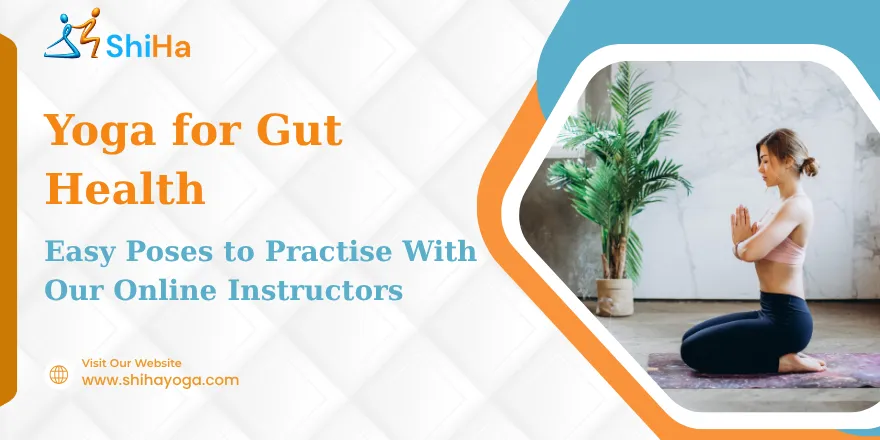
Yoga for Gut Health: Easy Poses to Practise With Our Online Instructors
You eat lunch and 1 hour later your stomach is way full, stuffed and bloated. Perhaps you experience gas, acid or your stomach simply just does not work on time. There are numerous people every day living with this and consider it to be normal. It's common but it doesn't have to be ignored. Yoga for gut health is an easy and light action remedy to make your belly feel light. A few simple poses and slower breathing can aid your digestion and help to settle the stress that can stir up your stomach. In this blog, you'll find the poses you can try, you'll learn how to breathe and how our online teachers help you step by step at home.
Why Does Your Belly Feel So Heavy?
Let's first see the problem before the poses. It will help you to practice more easily.
Stress and Your Stomach
Belly & Brain are Best Friends. They communicate with each other by the nerves. If you are feeling the threat or laboured you hear your body say "let's get away." This mode slows down digestion. This is how people may experience cramps, gas, and an upset stomach before an exam or before a large meeting.
Slow breathing and easy movement tell your body. "You are safe now. Then your stomach will be left at ease to do its job.
What Yoga Can and Cannot Do
Yoga reduces stress, tonics your stomach and makes your body work its bowels. Few studies indicate that it can make people IBS feel better. However, yoga is not magic. It is a medicinal product which is not able to cure a disease. It is like a helper which comes with good food, plenty of water and doctor's suggestions.
Yoga Poses for Gut Health: 7 Easy Ones to Try
Try these yoga poses for gut health, which are not too complicated and are easy to do. Slowly and relaxly and if there is anything that hurts, stop.
Easy Poses for Gas and Bloating
Vajrasana (Thunderbolt Pose)
Sit down with back straight onto heels. Place hands on knees and take slow breaths. Minimize the time spent: sit for 3-5 minutes. This is the one pose you can do right after eating, so it is great after lunch or dinner.
Pawanmuktasana (Wind-Relieving Pose)
Lie on your back. Repeat with the other side – hug knee to chest for 30 seconds each. The dig pressure inside of your abdomen may assist your gas get out.
Cat-Cow Pose
Advanced to a crawling position, with hands and knees off the ground. Take in a breath and raise your chest. Exhale complete with a rounded back. Do this 8 to 10 times. It is similar to a soothing belly massage and a soothing back massage.
Twisting Yoga Asanas for Gut Health
Twists wring and squeeze your belly in the same way you would wring a towel. The following yoga asanas for stomach problems are known to help relieve constipation. But if you have the issue of constipation the most, you can also refer to our blog on yoga for constipation relief.
Reclining Spinal Twist
With arms at your sides, lie on your back on the mat with bent knees. With both knees dropping on one side, keep shoulders on ground. Hold for 30-60 seconds, then change it.
Seated Half Twist (Ardha Matsyendrasana)
Sit tall and twist lightly to your bent knee. Maintain a long back posture. Repeat for 5 breaths, making sure to not force the twist.
Poses That Calm Your Mind and Belly
Child's Pose (Balasana)
Sitting down on your heel, bending forward towards your feet with your head on the mat. Please remain for 1-2 minutes. It relaxes your belly and your thoughts.
Cobra Pose (Bhujangasana)
Lie down on your belly, put hands under shoulders and raise chest. Hold for 15 seconds. Maintain moderate/lower lift and easy.
Yoga & Pranayam for Gut health: Breathing for a Happy Stomach
When practiced together, yoga with gut health pranayam is more effective, as it helps to soothe the stress that disturbs your gut.
Belly Breathing
Use your hands to put pressure on your stomach. Inhale slowly and deeply – your stomach should expand. Slowly exhale and notice its descent. Repeat for 3 - 5 minutes. This is the simplest breathing exercise for beginners who can't think up anything.
Alternate Nostril Breathing
Press your right nostril shut, take a breath in through your left nostril. Then close your left and breathe out on your right. Switch sides and do for 5 minutes. It slow the pace of thinking and relaxes the mind.
Humming Bee Breath
Breathe in, then hum softly like a bee as you breathe out. Repeat for 2-3 minutes. The soft hum relieves nerves rapidly and has a nice soothing effect.
What You Learn in Our Online Yoga Classes
Watch videos and view them while reading about them. It may be hard for you to determine whether you're doing a pose correctly. Thus, it is better to have guided classes.
How Our Online Instructors Help You
- They teach each pose at a slow pace to make it easy for you to follow
- They will suggest easier poses when one poses difficulty.
- They let you know when to practice, so you don't get hurt.
- They give you a brief program to fit in your schedule
- They respond to questions related to food, breathing and posture.
Tips for Practising at Home
- Select a corner on the floor, a mat or a soft blanket
- Use comfortable and loose fitting clothing
- Turn off the phone and concentrate
- Practise at the same time each day to build a habit
A 15-Minute Routine to Start With
Repeat each day, first thing in the morning before eating or last thing at night about two hours after dinner.
- Belly breathing: 2 minutes
- Cat-Cow: 1 minute
- Wind-Relieving Pose: 1 minute on each side
- Reclining twist: 1 minute on each side
- Child's Pose: 1 to 2 minutes
- Alternate nostril breathing: 3mins
- Vajrasana: 3 minutes to finish
Safety First
Although yoga is gentle, here are a few rules that will keep you safe:
- Do Vajrasana or slow breathing after eating food. Wait two hours between twists and forward bends.
- Ask your doctor first if you are pregnant, have a hernia or surgery in your abdomen recently.
- Before beginning, consult a doctor if you have an ulcer, strong acidity or a bowel disease.
- If you notice blood in your stools, are losing weight without trying or if the pain just does not go away, you must contact a doctor. These signs require medical treatment.
Small habits that promote a healthy gut.
A few simple habits can enhance yoga even more:
- Eat at the same time every day and chew your food well
- Drink enough water
- Include fruits, vegetables, and whole grains in your diet.
- Eat less oily and packaged food.
- After meals walk for 10 minutes
- Get to bed at the same time each night.
Final Thoughts
A healthy stomach requires healthy food, sleep and a rested spirit. All three of these can be done with the help of yoga. Don't just do it all at once. Choose two to three poses, a couple minutes of slow breathing and two weeks of practice a day. Then see how your stomach feels. If the condition is chronic like with IBS, read our blog on which yoga is good for IBS and let your doctor know. Making small changes consistently over time can have a comfortable impact.