
Feb 28, 2026
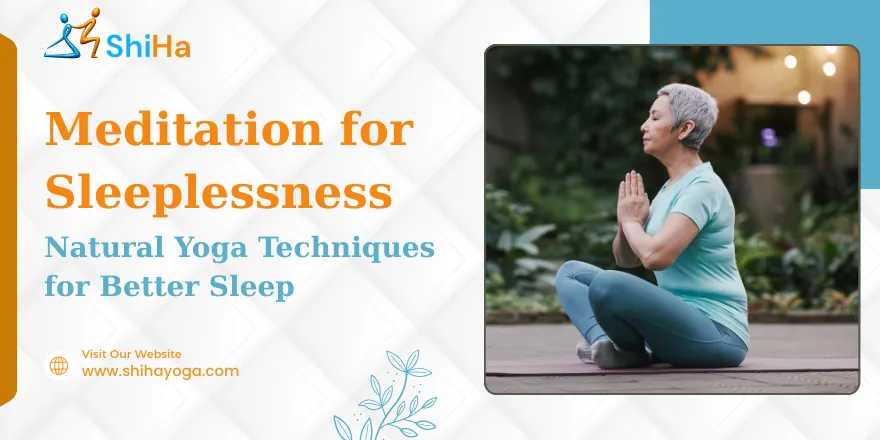
Meditation for Sleeplessness: Natural Yoga Techniques for Better Sleep
Sleep is critical in physical well-being, mental acuity and emotional equilibrium. Yet, stress, anxiety, digital disturbances, and poor lifestyle have become the factors leading many people nowadays to the problem of sleepless nights. Falling asleep is hard when the mind is not at peace at night because of it being active and restless. Here meditation of sleeplessness is able to come to the rescue.
Meditation is an ancient technique that has existed to relax the mind and to restore order in the body, becoming a natural method of relaxation. As opposed to medication in forms of sleeping pills or quick fixes, meditation is effective in treating insomnia, but rather, treating the cause of the problem: an active mind and nervous system. It makes the body at ease, enhances breathing habits and makes the mind ready to have deep and restful sleep with practice.
Within the frame of this guide we will discuss how meditation and sleepless nights can work, why it can and which yoga-oriented techniques of meditation can make you sleep more naturally.
The nature of Sleeplessness and Insomnia.
One should be aware of the causes of sleeplessness before learning how to meditate. Insomnia is a situation in which one struggles to fall asleep, remain asleep, or even to wake up and feel rejuvenated.
The frequent reasons of sleeplessness are:
* Stress and anxiety
* Spending too much time on the screen at night.
* Irregular sleep schedules
* Overreacting and mind stress.
* Poor lifestyle habits
* Lack of physical activity
As long as the body continuously thinks and worries, the brain is in the alert state. This inhibits the natural release of hormones of sleep such as melatonin. Meditation slows the mind, stress hormones go away, and the process of relaxation takes place in the body.
This is the reason why sleeplessness meditation has been among the highest suggestions as to natural interventions to enhance the quality of sleep.
How Meditation Helps Improve Sleep
Meditation has a physical and psychological impact on the body that induces healthy sleep. Meditation is one of the practices that provides an individual with a clear state of the mind, which helps the body to rest well.
These are some of the key ways of how meditation assists sleep:
Reduces Stress and Anxiety
One of the largest causes of the inability to sleep is stress. Meditation abates the nervous system and decreases the levels of cortisol making the body unwind.
Calms an Overactive Mind
Sleepless individuals are usually characterized with fast thoughts at night. Meditation teaches the mind not to get locked in thoughts.
Breathing and relaxation is enhanced.
It is promoted when one meditates as it promotes deep, slow breathing, which sends a message to the body that it is time to rest and relax.
Increases production of Melatonin.
Research indicates that meditation can contribute to the raising of melatonin levels which is the hormone that controls our sleep patterns.
Improves Emotional Balance
Meditation can eliminate stress and enhance the state of mind in general and it becomes easier to get into sleep without any effort.
Having practiced regularly, meditation to treat insomnia and sleepless nights will become a potent method of restoring healthy sleeping habits.
Meditating at Night–Before Going to Sleep.
It is also possible to establish a serene atmosphere before beginning to meditate.
Create a Quiet Space
Find a very quiet place in your home where you like not to be interfered with. It is possible to make the meditation easier by dim lighting and a comfortable sitting/lying position.
Avoid Screens Before Sleep
Attempt to keep away phones, laptops, or television at least 30 minutes prior to meditation.
Maintain a Consistent Time
It is best to start by meditating daily at night to make your body get used to relaxing so as to go to sleep.
Wear Comfortable Clothing
Comfortable clothes make your body more relaxed and enhance breathing.
No special tools are required to begin meditation. It is sufficient to have a yoga mat or cushion.
Discovering some of the simplest yoga poses that beginners should learn can also serve to soothe the body prior to meditation in case of new yoga.
The Best Meditation Techniques to overcome sleeplessness.
The plethora of meditation techniques can be used to relax the mind and increase the quality of sleep. Some of the best practices include those below.
1. Mindfulness Meditation
One of the most efficient and easy practices in the process of improving sleep is mindfulness meditation.
This method is concerned with living in the present and not judging what has come into mind.
How to Practice:
* Sit or lie down comfortably.
* shut your eyes, pour your breath within the deep.
* Give your attention to the inhalation levels.
* Become conscious of the breath of air going in-and out of your body.
When the mind gets diffused, then gently get yourself back to your breath.
A 10-15 minutes mindfulness meditation before sleep will help a great deal of reducing the mental activity and falling to sleep quicker.
This is an easy technique of sleep meditation that is suitable to the beginners.
2. Body Scan Meditation
Body scan meditation is a relaxation exercise method which aids in detention of physical tension in the body.
Most humans are stressed without even knowing it by having the stress in their shoulder, neck, and back. This stress may cause the inability to rest at night.
steps to practicing body scan meditation:
* Lie comfortably on your back.
* Close the eyes and make slow breaths.
* The focus of your eyes is your toes.
* Slowly take your consciousness around up through your body.
* Meditate upon every part of your body.
Move gradually through:
* Feet
* Legs
* Hips
* Stomach
* Chest
* Shoulders
* Arms
* Neck
* Face
This method is used to relieve bodily tension and it relaxes the body to fall into deep sleep.
3. Breathing meditation (Pranayama-Based Meditation).
Meditation of breathing could be taken as among the most effective means of the calm of the nervous system.
Slow breathing causes stimulation of the parasympathetic nervous system that performs relaxation and sleep.
Basic Medications Breathing style:
* Feel at your ease with a straight back.
* Four-second breathing in slowly inhaling via your nose.
* Two seconds later, hold your breath.
* Breath out in no more than six seconds.
* Repeat this process throughout 10 minutes.
The breathing pattern slows down the heart rate and makes the mind relax.
Meditation to the sleepless nights and insomnia is very effective when done through breathing meditation.
4. Guided Sleep Meditation
Guided meditation is a form of meditation where one follows relaxation practices guided by a person with a pleasant voice.
It is a form of meditation that assists beginner meditator who does not meditate well on his own.
A guided session may include:
* Breathing awareness
* Visualization exercises
* Body relaxation
* Gentle affirmations
Guided meditation gradually decelerates the activity in the brain and it assists in switching the body to sleep mode.
Most of the practitioners are taught these methods in well-developed courses or the most effective online yoga classes, where teachers teach them meditation and relaxation methods.
5. Yoga Nidra (Yogic Sleep Meditation).
Yoga Nidra is an intense restorative practice which is commonly referred to as yogic sleep. It is among the strongest ways of meditating to enhance the quality of sleep.
In Yoga Nidra, the body is in greatly relaxed condition, whereas the mind is alert.
Yoga Nidra has the following advantages:
* Deep physical relaxation
* Reduced anxiety and stress
* Improved sleep cycles
* Mental clarity
* Emotional balance
The following are some of the procedures of a typical Yoga Nidra:
* Savasana Lying in a comfortable posture.
* Following instructions leisurely.
* Concentrating on the breathing
* Awareness rotation between the body parts.
The factor that many individuals report about Yoga Nidra practice is that they fall asleep naturally during or after the practice.
This renders it as the most effective means of sleeplessness meditation.
Yoga Tools to Support Sleep Meditation.
Though meditation is on its own a potent tool, it can be complemented with gentle yoga to make it more relaxing.
Before the meditation session, some of the useful yoga practices involve:
Gentle Stretching
Basic stretches loosen muscles and get rid of physical body tension amassed throughout the day.
Forward Bending Poses
Forwards relaxes the nervous system and facilitates the relaxation process.
Child's Pose (Balasana)
This pose slowly bends the back and acquires slow breaths.
Legs Up the Wall Pose
This position facilitates the blood circulation and eases sore legs.
These positions are recommended during the practicing of the postures prior to the time of meditation, thus, the body will be in a position to relax and have a good sleep.
Simple repeat sequences of yoga poses may be begun to create a relaxing routine just before sleep by beginners.
Designing a Night Meditation Practice.
In sleep meditation, consistency is the most important. Creating a set of routines that a person performs at night will teach the body and mind to relax.
An example of a simple routine may appear as the following:
* Switch off the screens 30 minutes before sleep.
* Do some light stretching for 5 or ten minutes.
* Take a seat or sit down to meditate.
* Either body scan or meditation practice in 10-15 minutes.
* Farewell with thanks or some good wishes.
After a couple of weeks, you will develop a habit of linking this practice to sleep and therefore falling asleep will become easier.
How Long Does Meditation Take to Improve Sleep?
Sleep improvements are seen as a result of regular practice in meditation by many people in two to three weeks.
The gains though, are reliant on regularity. Meditation, whether it is done on a daily basis or even 10 minutes per day, can slowly change sleeping habits.
In the long run, meditation will enable reconditioning of the brain to relax by going to sleep.
Why It is better to Meditate than to take sleep pills.
Sleeping pills are not long-term solutions as they are normally accompanied by side effects and addiction.
On the other hand, meditation has long term advantages without complications.
The benefits of meditation are:
* Natural and safe solution
* Enhances general psychological state.
* Reduces stress and anxiety
* Enhances emotional balance
* Promotes deep relaxation
That is why meditation is offered by many experts in the field of wellness as the initial step of sleep issues treatment.
Consistency and correct practice can also be maintained by learning the methods of meditation by guided classes or by the best online yoga classes.
Final Thoughts
One of modernity challenges is sleeplessness, yet it does not need to be an invariable aspect. There are basic yoga-based meditation methods that would aid in relaxing the mind, relieving stress and getting the body ready to sleep in a deep and restful manner.
Meditation in case of sleeplessness will ultimately assist in regulating breathing, and relaxing the nervous system and diminishing the mental activity prior to bedtime. With time, one is able to sleep naturally and wake up refreshed.
It does not matter which tools you use to meditate and practice breathing or Yoga Nidra, it is always consistency. Spending just a few minutes of your time meditating before going to sleep could help you significantly in improving the quality of your sleep and the general well-being.
And in case you are having trouble with the restless nights begin small. Establish a soothing evening exercise, do some meditations, and give your organism a chance to be in touch with the natural mode.
Insomnia and sleepless nights can be cured through meditating but you must be patient and practice regularly to convert your nights to a restful night of sleep.
Frequently Asked Questions About Meditation for Better Sleep
1. Is meditation a remedy to insomnia?
Indeed, meditation is a way of enhancing sleep through relaxation of the mind and decrease of stress. Meditation of sleeplessness relaxes the nervous system; slows breathing; and diminishes the racing thoughts when done consistently which makes it simple to fall asleep and to sleep naturally.
2. How important is it to meditate before going to sleep?
A 10-20-minute meditation session before going to sleep is most frequently sufficient to ease the body and mind. With regular practice, the brain also gets used to that since meditation is linked with sleep hence making meditation more effective in the long run with insomnia and sleeplessness.
3. Which meditation method is the best for insomnia?
Such methods as mindfulness meditation, breathing meditation, body scan meditation and Yoga Nidra are very useful with sleep. They relax the mind, relieve tension in the body, and calm the person ready to sleep.
4. Is it fine to sleep during meditation?
So, it is absolutely normal when someone falls asleep in a near state of such meditation, particularly when conducting meditations before sleep. It usually indicates that the body is in a deep state of relaxation which is beneficial to those having insomnia or sleeplessness.
5. What is the duration of the meditation period to enhance sleep problems?
This is a good improvement that many individuals begin to realize after two to three weeks of constant practice. The outcome is however reliant on consistency. Daily meditation has the effect of slowly enhancing sleep quality and decreasing nighttime anxiety.
6. Is meditation a practice that beginners can use to be sleepless?
Yes, meditation is appropriate to the beginners and does not involve any special skills. Basic breathing meditation or mindfulness can be learnt easily and can be practiced at home. It is better to begin with brief sessions to develop a habit of meditation.
7. Is meditation to be performed standing or sitting or lying down at night?
Both stands are valid on the basis of comfort. Sitting meditation can also be used to be aware, whereas lying down may be used to achieve stronger relaxation. A lot of individuals tend to lie down during meditation only because they want to sleep better.
8. Does meditation substitute sleeping pills?
Meditation is a natural process that would deal with the underlying causes of insomnia like stress and anxiety. Although this might not happen as soon as medication is withdrawn, regular meditation will lead to the slow improvement of dependency on sleep aids and better sleep schedules.
9. Is yoga beneficial to the outcomes of sleep meditation?
Namely, light yoga preceding the meditation is beneficial to loosen the muscles and eliminate tension. Simple poses or relaxation exercises prior to the meditating process make the body ready to relax or attain a deeper sense of calmness, and enhances the quality of the sleep.
10. Does guided meditation assist insomniacs?
Guided meditation is quite beneficial to novice meditators and those practitioners with an active mind. Meeting instructions guided allow one to stay on track, calm down and also makes one have an easier time with a sleepless night.