How Yoga Practice Can Reduce Stress, Improve Sleep, and Boost Energy
Things can get hectic and exhausting in life. The mind can become stressed with the activities of school, getting a job, family life and day to day issues. Long-term stress is also going to impact sleep and energy. Yoga practice may be a simple tool for relaxing one's body, soothing the mind, gaining a better night's sleep and feeling more active during the day. In yoga, slow body movements, breathing and relaxation are included; it can help anyone of any age or fitness level.
Yoga is also known to promote stress management, emotional health, and sleep facilitation. There is no need to practise poses and positions which are hard or require many hours. It doesn't take much to develop a better, quieter lifestyle with just an ordinary and daily regimen.
How Yoga Practice Helps Reduce Stress and Calm the Mind
The body is typically tight, and the mind is too full regarding stress. You might see shoulders that are tight, see clients' rapid heartbeats or even have more ideas at any given time. It is time to slow down while you are practising yoga.
Your attention shifts from your daily concerns when moving slowly and concentrating on your breathing. Simple yoga asanas can help to loosen tight muscles, and slow breathing can allow you to feel calmer.
Yoga for Peace of Mind Through Slow Movement
The more you can use this gentle practice if your mind is full, the more helpful it can be. Slow stretches, easy yoga poses, breathing and some quiet time of relaxation may be included in Yoga for Peace of Mind.
Rather try out the following simple movements:
- Child's Pose
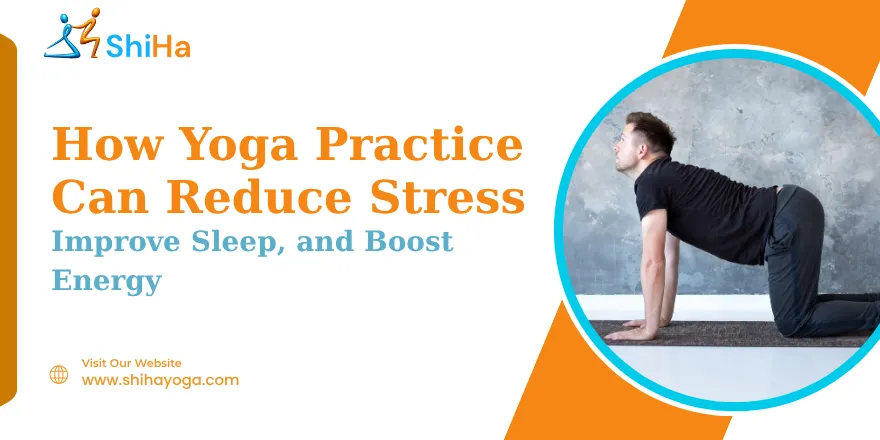
- Cat-Cow Pose
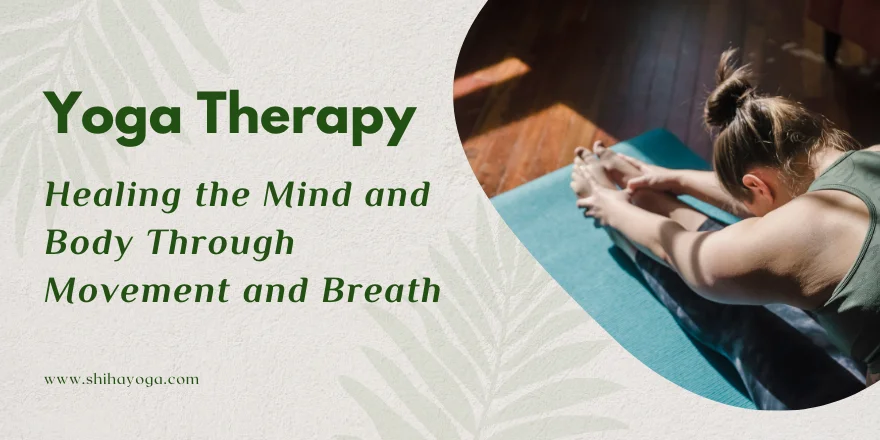
- Seated Forward Bend
- Legs-Up-the-Wall Pose
- Easy seated breathing
These movements are not to be flawless but rather should look as natural as the person can. The aim is to proceed slowly and non-violently and tune into your body.
Why Breathing Matters During Yoga Practice
In yoga breathing plays an important role. If you are anxious, you will start to breathe rapidly, shallowly or both. Slow, slow breathing can help attend to the here & now.
Again, a simple exercise is to sit comfortably, breathe in slowly and slowly breathe out. This can be done for a couple minutes.
A Simple Yoga for Peace of Mind Routine
Try this quick exercise if you are feeling stressed:
- Take a minute of silence.
- Take five slow breaths.
- Do gentle neck and shoulder movements.
- Practise Child's Pose.
- Rest and relax for several minutes.
Regular practice of yoga for peace of mind can be a healthy break from your busy day. Yoga is not about stopping ALL of your thoughts. This is about slowing down and bringing your attention back to your body and breath.
How Yoga Practice Can Improve Sleep Quality
Quality sleep provides the body with rest and the brain with a recharge. Stress and constant thinking, though, can make it difficult to find some “me” time to relax at night.
A relaxing yoga sequence before sleep can aid in winding down the body. Several studies have noted improvements in sleep in groups using yoga. A brief history of the study of yoga for sleep.
Yoga Nidra for Deep Sleep and Relaxation
Yoga Nidra for Deep Sleep is a relaxation technique typically performed in a relaxed and comfortable body position, on the floor or a bed. Rather than change position to the various poses, the person remains in a fixed position while taking the calming instructions.
There may be a practice with:
- Alternate relaxation of different parts of the body
- Being aware of the breath.
- Releasing physical tension
- Quietly observing thoughts
- Being in a relaxed state
If Yoga Nidra for Deep Sleep is performed in the evening, then it becomes an aid to the evening routine, as it helps us to be deeply relaxed. Studies recently conducted indicate that Yoga Nidra can be beneficial in cases of sleep-related issues; further in-depth studies are required to confirm this.
A Gentle Evening Yoga Practice for Better Sleep
Do not do yoga exercises to the extreme before going to bed. Select slow, relaxed ones to have them instead.
You can try:
- Butterfly Pose
- Child's Pose
- Seated Forward Bend
- Supine Twist
- Legs-Up-the-Wall Pose
Conclude with a few minutes of Yoga Nidra for deep sleep and/or peaceful and quiet relaxation.
Simple Tips for Yoga and Better Sleep
To make your evening yoga practice more helpful:
- Work out at your own time (approaching bed).
- Don't yell, try to stay quiet.
- Avoid difficult poses that make you feel too active.
- Focus on slow breathing.
- Try to follow a regular routine.
Take just a short, quiet practice, and use it to mark this to your body to pause and slow down.
Yoga practice can help to increase energy in the day.
A lot of people feel that physical activity is tiring the whole day. But slow rolling can also help make you more alert. Long sitting can cause stiffness and weight in the body. Yoga can assist you to stretch, move and breathe more deeply.
Yoga in the morning is a good practice to do some exercise. A 2026 study of young adults concluded that yoga was more energising and relaxing when practised in the morning than it was for a control group.
Simple Yoga Poses to Feel More Active
Easy poses include situations like:
- Mountain Pose
- Cat-Cow Pose
- Downward-Facing Dog
- Cobra Pose
- Warrior Pose
- Gentle standing stretches
These poses are useful to relieve the body following sitting or sleeping.
Yoga for Peace of Mind can also help improve your energy.
The impact of stress consumes a lot of energy. If the mind is busy throughout the day, then even doing a little amount of physical work may lead to being tired. At this point, yoga for peace of mind can come in handy.
A few minutes to breathe, stretch and relax should help you to feel refreshed. Sometimes it's not necessary to strain a tired body, it just needs a bit of rest.
How to Create a Simple Daily Yoga Practice
There is nothing like a long routine in yoga to enjoy the benefits. Progress by starting with a brief period of time that may be manageable.
Morning Routine
Religiously do soft stretches and breathing for a lightening session of 5-10 minutes to boost energy levels on a daily basis.
Afternoon Break
When you think you are stressed or fatigued, get a short break. Yoga for peace of mind: calm and relaxation via soft stretching and slow breathing.
Evening Routine
Relax your body in calming poses before going to bed in deep sleep with Yoga Nidra.
The ideal yoga practice is the one which you are able to do regularly. If you had extra time one day, you might practise for extra time that day, and if you didn't have time one day, you might practise for only a few minutes that day. Both are okay.
Final Thoughts
A simple practice that can help maintain a calmer mind, better sleep and healthier everyday energy is yoga! Simple exercise helps release tension within your body, deep breathing slows you down, and relaxation helps the mind rest.
Morning helps you start your day with energising poses, get a good, quick yoga for peace of mind break during those moments of stress and finish the day with yoga nidra for deep sleep. Yoga can be made more accessible through taking small steps.
Flexibility and experience are not a requirement to start off. Take it easy, pay attention to your body's needs and use yoga as a calming element of your life.