How to Do Butterfly Asana Correctly: A Step-by-Step Guide for Home Practice
Common problems caused by sitting in chairs, sofas and car seats for so long are tight hips, stiff lower back and sore legs. The good news is that these areas are all openable without special skill or equipment in just one seated posture. Butterfly asana takes a few quiet minutes along with a mat and it has a lot of value, but many people do it in the wrong way. Here you will find the steps, the common mistakes, easy tips to face tight hips, and the true benefits of practicing the butterfly asana regularly.
What Is Butterfly Asana?
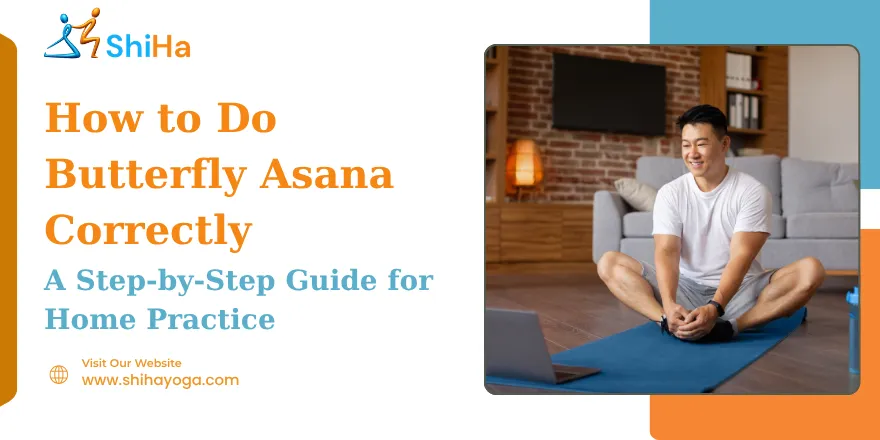
Butterfly asana is yoga sitting posture wherein you sit with soles of feet together with your knees falling open to both sides. Your legs from the front resemble butterfly's wings.
Other Names You May Hear
This position might be referred to in varied ways in books and classes:
- Baddha Konasana (its Sanskrit name, meaning "bound angle pose")
- Titli Asana (the Hindi name for butterfly)
- Cobbler's seating posture (as shoemakers traditionally sat like this)
All of these names refer to the same pose - don't worry if your teacher uses a different one.
Why It Is a Good Pose for Beginners
There is no need to be flexible initially. You sit on the floor, so there is little risk of falling. You can make it easier with a cushion. That's why butterfly asana yoga is often one of the first poses that are mastered in beginner yoga classes.
How to Do Butterfly Asana Correctly: Step by Step
Take steps slowly and perform them at a slow pace. Take your time in setting up it's a good way to take care of your knees and back.
- Sit tall. Sit on your mat with both legs stretched out in front of you. Keep your back straight.
- Bend your knees. Move knees alternately up and towards the body.
- Join your feet. Press the soles of your feet together. Keep your heels as close to your body as feels comfortable.
- Hold your feet. Wrap your fingers around your toes or ankles.
- Lengthen your spine. Sit up tall, like you are being pulled upwards to the ceiling.
- Relax your knees. Allow your knees to fall toward the floor on their own. Never try to push them down!
- Breathe slowly. Breathe in through your nose, and breathe out slowly. Stay here and relax your shoulders.
- Come out gently. Slowly lift your knees and stretch your legs forward. Shake them for several seconds.
How Long Should You Hold It?
For beginners, 30-60 seconds is sufficient. Gradually increase to 2-3 minutes over several weeks. It is more important to breathe steadily than to stay a long time.
Butterfly Asana Benefits
Let's now consider the advantages of butterfly asana. These don't appear on day one – with consistent practice.
Benefits for the Body
- Opens tight hips. The pose stretches the inner thighs, groin and hips.
- Eases lower back stiffness. Sitting upright with your hips open will ease lower back tension.
- Improves posture. Sitting with a long spine fosters awareness of how you sit.
- Helps your knees and ankles move better. These joints are kept 'active' by gentle movement.
- Supports circulation. Slowly stretch and breathe helps the body feel lighter in the legs.
Benefits for the Mind
- Calms the mind. This relaxed seated posture, breathing slowly, relaxes you.
- Lowers stress. After a few minutes of regular breathing many people feel relaxed.
- Builds focus. Calmness and awareness of breath is a training in the focus field.
Honest Note On Health Claim
That's because it's said that this pose can help heal numerous ailments. This is not true. The asana of butterfly should be a gentle stretch-relaxation asana. It can help keep you healthy, but isn't a medical treatment. If you have a health condition, talk to your doctor first.
Common Mistakes and Easy Fixes
Simple poses can go wrong! The following are some of the typical errors.
Mistake 1: Rounding the Back
A forward curve in the back is likely to occur while the hips are contracted. This exerts stress on the back.
Fix: Sitting on a rolled up blanket/cushion. It raises hips and helps to keep back straight.
Mistake 2: Forcing the Knees Down
It is not good to keep the knees pushed towards the floor as this will strain the hips and knees.
So fix it: Take advantage of the pull of gravity. Good – knees remaining high. Support knees with pillow.
Mistake 3: Pulling the Feet Too Close
When the hips are tight, bringing the heels to the body very close to the body may even cause pain in the knee.
Fix – place your feet further back. To approach, only when they are prepared.
Mistake 4: Holding Your Breath
When someone stretches, they may hold their breath many times. This will make a muscle tense.
Fix: Take slow breaths through your nose, relax your jaw and shoulder.
Easy Butterfly Asana Yoga Variations
When you feel like it's comfortable, attempt these changes.
Fluttering Butterfly
Hold your feet and gently move your knees up and down, like a butterfly flapping its wings. Repeat this exercise for 20-30 seconds for a warm up.
Forward Fold Butterfly
Breathe out and fold forward from your hips, with a long back, from the basic pose. Place hands on the ground. Hold for 5 breaths.
Reclined Butterfly (Supta Baddha Konasana)
Placing body on back with knees open and feet together. Place arms at your sides. It is a very relaxing version, which can be used at the end of a session.
Who Should Be Careful
The asana of butterfly is gentle but those who have to be careful should have to be consulted by a doctor in advance:
- People with a recent knee, hip, or groin injury
- People with sciatica or strong lower back pain
- Pregnant women, who should practise only with a doctor's approval and expert guidance
- Anyone who experiences sharp pain or tingling during pose
Stop at once if you feel pain. A gentle stretch is fine, but pain is a warning sign.
A Simple 10-Minute Routine with Butterfly Asana Yoga
Try this short routine to add butterfly asana to your day:
- Easy seated pose: 1 minute of slow breathing
- Fluttering butterfly: 30 seconds
- Butterfly asana: 1 to 2 minutes
- Forward fold butterfly: 5 breaths
- Seated forward bend: 1 minute
- Reclined butterfly: 2 minutes to finish
Butterfly asana is also a good partner for other seated poses. If you want to sit with better posture, read our guide on yoga sitting positions. If you want to move on to a deeper seated pose later, learn about Padmasana, the lotus pose.
Final Thoughts
Butterfly asana may look simple, but doing it correctly makes a big difference. Sit tall, let your knees fall naturally, breathe slowly, and never force the stretch. Practise for a few minutes each day, and in a few weeks you may feel looser hips, an easier back, and a calmer mind. Be patient with your body. Every small stretch counts.