Daily Yoga for Better Posture: Simple Poses to Reduce Back Pain Naturally
Bad posture is a habit that can develop over time. A desk job, looking down at one's phone, or spending too long on a sofa can cause tightness in the neck, shoulders and back.
Yoga each day may enhance your body's movement after extended sitting. Simple stretches and poses can help keep them better supported, aware of their bodies and minimise any daily stiffness. Can be beneficial for others trying to find yoga for back pain or yoga poses for beginners.
The great thing about this is that you don't have to have an extended, difficult practice! Just a couple simple poses a day can be a great start.
Why Daily Yoga Is Helpful for Better Posture
Your body was designed to move! Muscles can get tight and stiff or may lose activity if you maintain the same position for an extended period of time.
Rather than this, a normal yoga session a day encourages you to stretch, move and be aware of the way your body feels.
Daily Yoga Can Help You:
- Gently move your back and spine
- Pull shoulders and hips back and up
- Improve body awareness
- Support a stronger back
- Take a break from long sitting hours
- Feel less stiff after work or study
- Establish a routine for getting active
Good posture is not just standing up straight for 24 hours, it is standing straight and aligned to the normal position for good posture. It involves how to not hold positions for too long.
Simple Daily Yoga Poses For Better Posture
Not all the poses are advanced and don't have to be started. These gentle poses can help you establish a quick 5 minute home yoga practice.
1. Cat-Cow Pose
Cat-Cow is a very gentle spinal movement. It is particularly helpful following long travel.
How to Do Cat-Cow
- Start on your hands and knees.
- Place hands under shoulders.
- Keep your knees beneath the hips.
- Breathe in and gently lift your chest.
- Exhale and slowly round back.
- Continue with slow and comfortable movements.
Avoid running fast. Follow the theme of the breathing in each movement.
Why is cat-cow good for posture?
This pose promotes the spine to rotate in other movements. It could be a straightforward approach to preventing you from remaining in the same posture for excess time.
2. Child's Pose (Gentle Back Stretch)
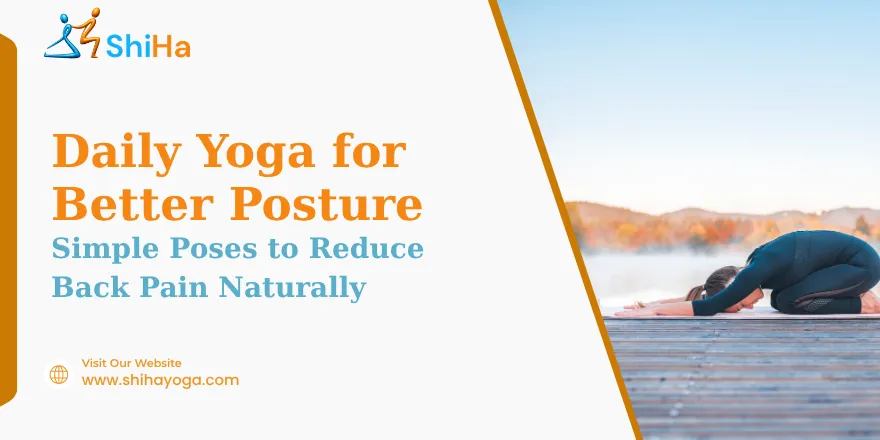
Child's Pose is one of the most simple yoga poses for beginners. It will allow your body to calm down and relax.
Sit on your heels and bend your upper body forward. Extend arms forward or across the body.
Child's Pose can be used to:
- Relax the shoulders
- Rest after other yoga poses
- Stretch away back gently
- Emphasise slow breathing.
- Go on a mini-break from a hectic day
There is no need for you to push your body towards the ground. If you require more support, use a cushion or folded blanket.
3. Sphinx Pose to Open the Front of the Body
There is a large portion of the population that will spend their entire day in a hunched position while working, studying or talking into a phone. Sphinx pose will send your body the other way.
Face down and rest elbows under shoulders. Keep your forearms on the floor and slowly lift your chest.
Points to keep in mind.
- Keep your shoulders relaxed.
- Avoid going too far forward with the lower back.
- Keep your neck comfortable.
- Only lift as much as is comfortable.
- Breathe slowly throughout the pose.
This is a yoga pose that should be practised each day but is not necessarily deep. Small and comfortable—these are all that are required for a movement.
Yoga for Back Pain: Try a Gentle Bridge Pose
Bridge pose can facilitate the activation of the muscles in the hips, legs and back.
Spreading your legs apart on the floor and resting your feet on the floor with your knees bent, lie on your back with your legs flat. Carefully rise to an appropriate height and slowly lower to even more.
How to Practise Bridge Pose
- Lie comfortably on your back.
- Bend your knees.
- Get into a standing position.
- Keep your arms beside your body.
- Come up at a slow pace to raise your hips.
- Hold for a few comfortable breaths.
- Slowly bend to the ground.
Individuals frequently incorporate relaxing exercises like this into their yoga routine. Easier poses, such as this, are often a component of yoga for back pain exercises.
Do not force the pose!
You need not lift your hips up very high. Try to move smoothly and not make a large backbend.
4. Cobra Pose for Daily Yoga
Other gentle poses which can facilitate the movement of the front body and upper back are available: cobra pose.
Rest on your back with your hands close by your ribs. Raise your ribcage gently, but continue the movement at a comfortable speed.
Ensure that these are kept in mind:
- Avoid over lifting.
- Sloping shoulders not towards the ears.
- Bend your elbows if needed.
- Don't push across the pain.
- Lower down slowly.
When incorporating Cobra Pose into your daily yoga practice when you've been spending long hours leaning forward, it can be a simple routine to change your position.
5. Mountain Pose for Better Standing Posture
Mountain Pose is a simple pose which can be challenging yet demonstrates awareness of one's standing stance.
Keep one's feet in a natural position, standing quite comfortably. Relax your shoulders and keep your arms by your sides.
While Standing, Notice:
- Are you leaning to one side?
- Tight shoulder muscles:
- Are you holding your breath?
- Is your head leaning too far forward?
- Do both feet feel balanced on the floor?
This type of body awareness is an important part of daily yoga. The first step to better posture may be awareness of what is affecting it.
How Long Should You Practice Daily Yoga?
Practice for a lengthy amount of time is not essential. Any time is right for a movement break, even if it's for just a short period of time.
You Can Start With:
- 10 minutes in the morning
- 10 minutes after work
- Some basic poses for study breaks
- Gentle stretching prior to sleep
The most essential is to select a workout that you feel you can stick with.
Yoga for Back Pain: When Should You Be Careful?
Whilst yoga can help relieve pain caused by stiffness which happens on a daily basis, all back pain is not created equal.
Stop Practising a Pose If You Feel:
- Sharp pain
- Sudden pain
- Increasing discomfort
- Pain moving down the leg
- Numbness or weakness
Gentle yoga for back pain is and always will be about the ease and comfort of your body. Seek the advice of a trained health care provider if pain is intense, persistent, or develops following an injury.
Make Daily Yoga a Simple Part of Your Day
You don't need a well-equipped yoga studio, a lot of money, and a mastery of a lot of different yoga techniques. It may take just a little and just a few moments.
Begin by using the poses in this guide that are easy to master. Try to concentrate on breathing slowly downwards and move comfortably. With practice, you might be more attuned to your body and realise when you need some rest.
There's no requirement to develop a good body when it comes to practising yoga every day. It's to assist you to move, breathe and focus more on the senses of your body. Practice is a journey – one after the other, keep it small and always do it until the practice becomes a healthy habit in your daily routine.