10 Minute Yoga Routine to Relieve Neck and Shoulder Pain
People feel it is difficult to perform routine tasks when they have neck and shoulder pain. Tightness and discomfort can result from sitting and working at a computer screen or holding a stress pattern in the upper body with the arms locked or held tight, literally "dead" in the upper body, for extended periods of time. It takes only 10 minutes of yoga for a person to get rid of neck and upper shoulder pain and to make the body loose, calm and refreshed.
Advanced yoga practice and equipment is not required. The movements can be performed at home, before, during or after your work and at any time your neck and shoulders become stiff. Take steps slowly and avoid over-extending yourself.
Why Try a 10 Minute Yoga Routine for Neck and Shoulder Pain?
Your neck and shoulder region is a top working region throughout the day. When the position of the shoulders is not optimal and/or there is a repetitive motion involved, the muscles can tighten up.
Do a brief 10-minute yoga sequence to ease neck and shoulder tension to help you
- Relax the tension in the neck.
- Loosen stiff shoulders
- Improve upper-body movement
- Take a short break from sitting
- Improve body awareness
- Feel more relaxed after a busy day
Practising regularly may even help you remember to sit and stand well. When you already notice that your back is stiff or tight, Yoga for Back Pain to Relieve Stiffness may be a good interlinking topic to keep extending your simple daily practice of yoga.
Before You Start Your 10 Minute Yoga Routine
Select a peaceful and safe environment. Use a yoga mat, carpet or chair when necessary.
Follow these simple tips:
- Wear comfortable clothes.
- Make smooth and slow motions.
- Normally breathe through the exercise.
- Do not pull or push your neck forcefully.
- If sharp or intense pain occurs, stop!
The aim is not to bend the farthest! This is to aid relaxation.
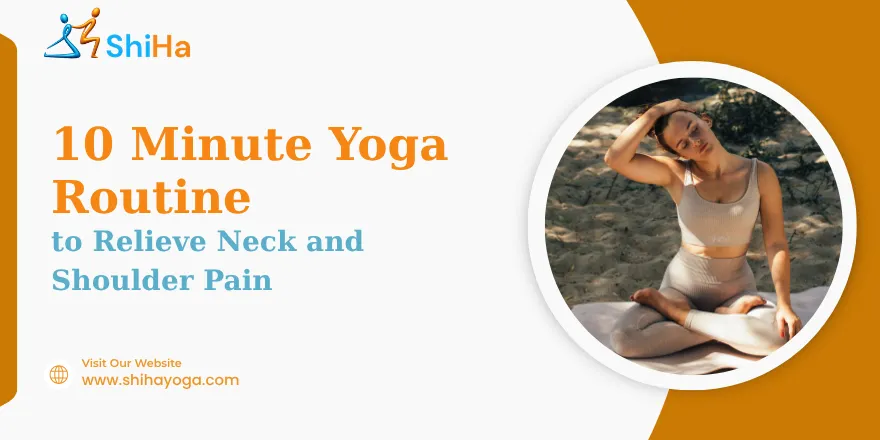
1. Neck Side Stretch – 1 Minute
Sit and/or stand comfortably. Your spine should be as straight as possible, with your shoulders loose, untensed.
How to do it
- Gently bring the right ear towards the right shoulder.
- Relax both shoulders.
- Take a couple quiet breaths.
- Bring head towards centre.
- Repeat on left side.
The relaxation massage treatment may help relieve the binding sensation in the sides of your neck. Allow your ear to contact your shoulder, do not push.
2. Shoulder Rolls – 1 Minute
Shoulder rolls are pretty easy but very pleasant after a long period of sitting.
Steps
- Raise both shoulders to ears.
- Slowly roll backward.
- Lower them gently.
- Repeat several times.
- Then change direction and roll forward.
Attempt to synchronise breathing with movements. Try to sync breathing and movements. Inhale when the shoulders are lifted up and exhale when they descend.
3. Seated Neck Release – 1 Minute
Sit with feet on the floor, and sit so that you feel good in your seat.
Slow neck movement to stretch areas of tension
Slowly turn your head to the right and peer around. Breathe out for a couple breaths. Return to the centre and repeat on the other (left) side.
Do not tuck your chin down so that it is below the level of the floor. This is a small, comfortable arm and leg exercise that will ease the stiffness in your neck and shoulder area – just 10 minutes of yoga is enough.
4. Cat-Cow Stretch – 2 Minutes
Cat-cow is a gentle yoga movement to bring movement around the back, shoulders and neck.
Come onto your hands and knees.
For Cow Pose
- Breathe in.
- Gently lift your chest.
- Let your tummy fall back in.
- Maintain a longish neck.
For Cat Pose
- Breathe out.
- Gently curve your back as a circle.
- Relax your head in a normal manner.
Slowly transition from these two positions. You don't have to run around. Focus on making your spine and shoulders feel comfortable.
5. Thread the Needle Pose – 2 Minutes
This posture will release a soft stretch around the shoulders and upper back.
How to practise
- Begin on your hands and knees.
- Bring your right arm under this left arm.
- Lower your right shoulder toward the floor.
- Lay down your head comfortably, if able.
- Hold for a couple deep breaths.
- Slow return and change of pace.
Do not push your shoulder against the ground. Allow your body to relax as it would on its own. It can be particularly helpful for using this position when they are tight due to sitting at their desk.
6. Child's Pose with Extended Arms–1 minute
Child's pose is resting on one's knees, which can also stretch the upper body in a relaxing way.
Hip towards the heels, stretch arms forward. If possible, place your forehead on the mat.
Make it more comfortable
Caps should not cross the hips to the heels, put a cushion in between your hips and heels. Maintain long, relaxed arms.
Slow your breath and sense space before your shoulders and upper back.
7. Eagle Arms Stretch – 1 Minute
Can be performed in a sitting or standing position.
Bring arms to the front with hands facing each other. Place one arm over another and attempt to get the palms or hands together. If you don't touch hands, simply hold your opposite shoulders.
Raise your elbows and breathe into your upper spine/chest wall at the edge of the upper spine.
Repeat on other side.
This is a quick stretch that helps to move space between the shoulder blades and can possibly relieve pressure in tight areas following sitting for extended periods of time.
8. Gentle Shoulder and Chest Opener – 1Minute
Stand/take a standing or sitting posture with a straight but relaxed back. With hands placed behind the head, slowly push shoulders back.
Don't push up your chest (arms) too high.
Pause for some breaths, then relax.
This was very useful for me when I'm at my job and I spend most of the day looking down in front of me. During the activities your shoulders tend to collapse forward, and try to gently bring attention back with the chest opener.
Can Yoga for Neck and Shoulders Become a Daily Habit?
Yes, gentle yoga for neck and shoulders can be easily incorporated into your day to day routine! You can try these exercises during the day at any time, but they are good exercises for the morning between work breaks or at night.
You don't necessarily need a long class every day. Any short exercise can help you to slow down, relax and release tension.
Try these habits as well:
- The screen should be at a proper height.
- Make frequent work breaks.
- Do not use the phone for a long duration.
- Relax your shoulders while working.
- Change your sitting position regularly.
- Take plenty of low-impact activity all day long.
Final Thoughts
If you have shoulder and neck pain, keep in mind that a 10 minute yoga flow is all it takes to relieve some pain. The important thing is to move slowly, breathe easily and pay attention to your body.
Stretching out the neck, shoulder rolls, cat-cow, thread the needle, child's pose, and other simple poses are good places to start. These poses could become useful to relieve neck and shoulder tension with regular use.
Keep in mind yoga should be evidence of support, not suffering. Don't begin a new programme of exercise if you have a serious injury, severe pain or a health problem in your neck or shoulders, consult a healthcare professional.