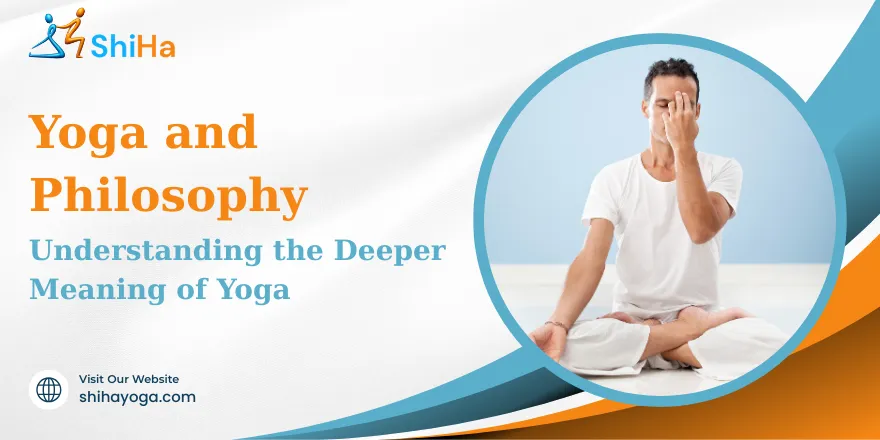
Yoga and Philosophy: Understanding the Deeper Meaning of Yoga
If you’re like most people in the world today, when you hear the word yoga you think about stretches, touching your toes, deep breathing or a soothing session at the end of the day. And that’s a very small part of yoga as a practice, even if those benefits do exist and are real and valuable. At the heart of it, yoga is a philosophical system – a way of looking at life, yourself, and your relationship to the world around you.
The yoga and philosophy are closely related fields. Yoga was, long before it became a worldwide wellness practice, a spiritual and philosophical religion based on the ancient Indian knowledge forms. These were practical instructions on how to live clearly, balanced, purposeful, and free on the inside.
In this article, we take a deep dive into yoga and philosophy — what it is, where it comes from historically, its basic principles, how applicable it is for the 21st century, and what yoga philosophy has to say about women’s perspectives, evolving as a person, and living mindfully. Whether new to yoga or an experienced practitioner, a grasp of yoga philosophy can change the way you practice — and the way you live.
Yoga and Philosophy: A Unified Way of Life
The word yoga is derived from the Sanskrit yuj which means “to yoke,” “to join,” “to unite,” or “to attach.” The philosophy of yoga is based on the principle of union—body and mind, thought and action, the personal self and the universal self.
Yoga isn't just something that's talked about in philosophy textbooks – it's something that’s alive and breathing and can be put into daily practice. It offers real-life instruments to regulate one's feelings, to end pain and to become more mindful in one’s everyday life. The poses (asanas) and breathing exercises (pranayama) are just one layer of a much broader system created to empower ethical living, mental discipline and spiritual insight.
That’s why yoga isn’t just for the mat. The real practice is in how we go about speaking, thinking, working, and relating to each other.
Yoga and Indian Philosophy: Ancient Roots That Still Matter
To get a more complete understanding of yoga you need to study yoga and Indian philosophy. From about the second century ce onwards, yoga developed in relation to certain dominant forms of Indian philosophy such as Samkhya, Vedanta, and Buddhism.
Classical yoga philosophy was codified in the Yoga Sutras of Patanjali, a classic text that also serves as a guide to the goals and process of practice. Patanjali defines yoga as the cessation of thought-waves (chitta vritti nirodha) – which is when purity and self realisation spontaneously manifests.
According to Indian philosophy suffering is due to ignorance—ignorance of what we are. Yoga provides a practice to dispel this ignorance by observance of the yamas and niyamas (ethical living), meditation and self-inquiry.
These teachings are as applicable today as ever, perhaps more so in a world rife with distraction, comparison and constant mental stimulation.
Yoga History and Philosophy: From Sacred Texts to Modern Studios
The history and philosophy of yoga are said to be thousands of years old. Yoga went through a number of stages, each one deepening the tradition.
Vedic Period – The piety and reverence of meditation and ritualism Period of the Upanishads – Inward journey of self, unconsciousness and moksha Classical Yoga – Eightfold Path of Patanjali Hatha Yoga Era - Emphasis on Physical Practices as Preparation for Meditation Contemporary Yoga – Fusion of ancient wisdom and modern living
As yoga made its way to the West, its physical element came more clearly into view. But the philosophical base has always been at the heart of the practice.
Today, many yogis are turning to rediscover yoga philosophy as a way to do more than take a load off their backs, and their overworked minds, and deal with stress and fitness.
The Eightfold Path: Philosophy in Action
Perhaps the most influential element in the yoga philosophy is Patanjali’s Eightlimbs path (Ashtanga Yoga).
These Eight Limbs are a complete formula for living consciously: Yamas – Honesty and non-violence are moral codes. Niyamas – Personal disciplines, for example, self-study and contentment. Asana – The physical stance. Pranayama – Breathing Practice. Pratyahara – Retreat from diversions. Dharana – Focusing. Dhyana – Meditation Samadhi – A deep inner awareness
This hierarchy reminds us that asana or posture work is just one strand of yoga. The philosophical components inform how we live with integrity, harmony, and awareness in our day-to-day life.
Yoga and Female Life Philosophy: A Path of Strength and Self-Trust
The philosophy of yoga is deeply intertwined with women’s lives. Yoga and women’s life philosophy share a common foundation of knowing, flowing and being strong from within—attributes that resonate with women in all walks of life.
In the place of pushing or forcing, yoga philosophy advocates listening from within. It is multi-tasking friendly – cycles, emotions and self compassion – all rolled into one. For a lot of women, yoga becomes a philosophy of empowerment—knowing when to act and when to rest and how to hold space for life, with and without guilt.
Yoga philosophy also pushes back against unrealistic societal beauty ideals by encouraging self-love instead of perfection. Its message is that we don’t earn our value by being productive or looking a certain way but by being present and real.
Yoga Philosophy in Modern American Life
In the current day culture which is fast moving, goal oriented, yoga philosophy is a strong balancing agent. It inspires slowing down, questioning habits and reacting with intention, rather than reacting.
For American practitioners, yoga philosophy often becomes a tool for: Stress and Burnout Management Enhancing emotional control Building better relationships Seeking meaning out with externally measured success
Yoga does not ask us to back away from life—it shows us how to engage with more presence. Even a small amount of breath awareness or meditation can change the way we respond to the challenges of our day.
Why Yoga Philosophy Matters More Than Ever
In an era of fast-paced living, comparison culture, and celebrification of productivity, yoga philosophy insists we slow down, turn inward, and connect with what really matters. It says we don’t find peace by changing the external world, but the way we relate to it.
Yoga philosophy doesn’t guarantee instant happiness – it gives you clarity, resilience and self-knowledge. Over the years, these attributes tend to make for a more stable and fulfilling existence.
On the mat, through meditation or in everyday choices, the teachings of yoga philosophy become a constant compass, guiding us to live with purpose, compassion and inner strength.
Final Thoughts: Yoga as Philosophy, Yoga as Life
Knowing yoga and philosophy changes yoga from a practice to a way of life. It encourages us to look past poses and ask deeper questions about why, how, and with whom we engage.
Based on ancient Indian knowledge, yet completely relevant in the modern day, yoga philosophy is highly applicable to everyday life – particularly for those in search of balance, authenticity and peace of mind.
When we accept yoga as philosophy, every breath is a practice, every challenge is a teacher, and every moment is a chance to expand.