
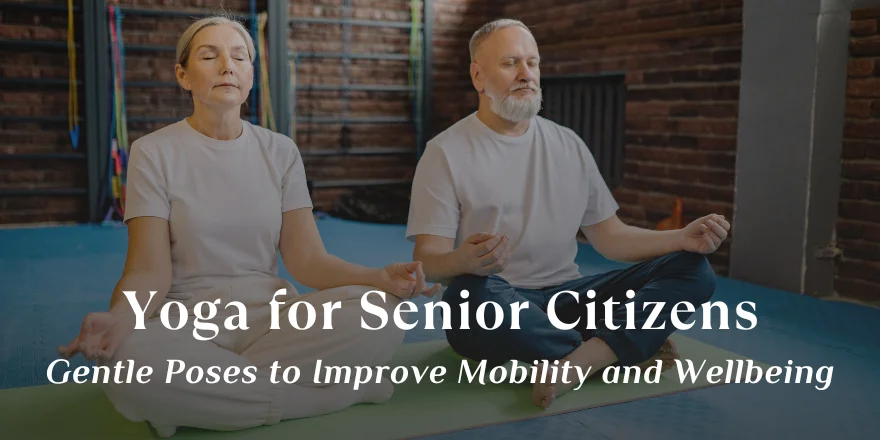
As we age, keeping active is critical to preserving strength, mobility, and emotional health. Yoga for Senior Citizens is a scientifically designed program that is both gentle and effective to maintain flexibility of the body, enhance balance and relax the mind. Whether a person is brand new to yoga, returning to movement after many years, or upgrading their practice, yoga offers a safe, modifiable, and whole-person practice that supports graceful aging.
For a lot of older people, regular workouts can be too intense—but yoga meets you exactly where you are. With modifications, props, breathing techniques and gentle movements, older adults can build stronger joints, better posture and even more energy. Activities such as yoga for seniors, chair yoga for seniors, and routines aimed at beginners open the door for all to participate, mobility concerns aside.
In a world that’s constantly moving fast, yoga also helps seniors on an emotional level. The rigor, organization and mindful attitude that yoga engenders are also featured in Yoga and Discipline, making it possible for seniors to reclaim a sense of control over both their bodily and mental well-being. And with the emergence of best online yoga classes, you can now easily practice from your home and get expert guidance.
This post discusses gentle yoga poses for seniors, the advantages of practicing regularly, advice for starting yoga for seniors and how to locate reliable yoga classes for senior citizens. If you’re a senior, a caregiver, or just trying to keep a loved one active, this will be your guide to a safe and fun yoga adventure.
What Makes Yoga Ideal for Senior Citizens?
As individuals get older, the body naturally changes—muscle mass shrinks, joints stiffen, balance becomes less reliable, and energy ebbs. Rather than the high-impact exercises that have negative effects on the body, Yoga for Elderly People is a slow, controlled, and gentle method that cares for the body rather than taxing it.
Yoga incorporates mindful movement, deep breathing, and gentle stretching, which contribute to its status as one of the safest types of physical activity for older adults. It is accessible to all: Whether one has arthritis, limited mobility, or even needs support while standing, there are modifications for every type of body to make the practice comfortable and accessible to all. This is why such routines as chair yoga for seniors and restored postures are widely recommended by physiotherapists, caregivers and holistic health advisors.
In addition, yoga improves the connection between the mind and body. Seniors are susceptible to anxiety, restless nights, or a disconnection from their physical form. Yoga helps them reconnect by increasing consciousness, calming their minds, and balancing their emotions. For beginners, starting yoga for seniors provides you a chance to increase your flexibility without having to worry about getting everything perfect.
Adding an element of discipline and routine to the practice is symbolic as well, in that it represents what it means to be Rubia Yogic: To remain steadfast in your pursuit of wellness, no matter how long it takes. Even expert instruction—from neighborhood studios all the way to the best live yoga classes—makes it possible for seniors to enjoy yoga safely, without the risk of injury or pushing themselves too hard.
Benefits of Yoga for Senior Citizens
Older adults who regularly practice yoga can expect significant improvements in their physical, emotional, and mental health. These are benefits that extend far beyond flexibility, and promote independence as well as reduce pain to help seniors live their best life. These are the most important benefits of yoga for the elderly:
1. Increased Flexibility and Joint Movement
Stiff joints are a common complaint as we age. Yoga’s gentle stretches lubricate your joints, relieve pain and keep you moving. Even if only for a few seconds, holding yoga poses for seniors such as Cat-Cow or Seated Side Bend can greatly increase your range of motion.
2. Improved Balance and less Likelihood of Falling
A senior losing balance is a big problem. Yoga works the core and legs, and improves balance. Mountain Pose and Chair-Assisted Tree Pose are just two of the senior yoga practices designed to make you feel steadier and more confident in doing life’s little tasks.
3. Stress Relief and Emotional Stability
Yoga promotes mindful breathing and relaxation techniques that soothe the nervous system. The calming effect on the mind and body relieves stress, improves mood and sleep – thus yoga is considered a natural medicine for emotional health.
4. get stronger and stand up more straight!
As we age our muscles tend to get weaker and our posture tends to get more hunched. Yoga builds strength in large muscle groups, enhances spinal alignment, and encourages good posture. even chair yoga…for seniors…can increase strength safely.
5. Better Blood Circulation and Heart Health
Slow motions accompanied by deep breaths stimulate blood circulation, which is a positive factor for the heart. “Gentle yoga can be a very effective complement to medical care for seniors who may be suffering from some hypertension or lifestyle diseases.
6. Growing Confidence and Autonomy
Better mobility, strength, and calm are among the reasons older adults say they feel more empowered in their daily routines. Yoga promotes awareness of the self, discipline and regaining power – key components of Yoga and Discipline.
Best Yoga Poses for Senior Citizens (Safe & Easy)
Yoga does not require seniors to push themselves to the limit. Rather, a combination of safe, slow and controlled movements that gently strengthen and mobilize support the body moving from one pose to the next. Here are some gentle yoga poses for beginners that seniors can do to help with flexibility, balance, and strength. All of these may be done on a yoga mat, but for those with limited mobility, ‘chair yoga’ may be a viable option.
1. Mountain Pose (Tadasana)
A grounding pose that lengthens your spine and helps with posture, stability and balance. Practicing seniors can usually do this pose standing by a wall or holding on to a chair for support.
How it helps:
Strengthens the legs, improves alignment and increases body awareness.
2. Seated Cat-Cow Stretch
Great for seniors with limited motion, this chair-based movement helps alleviate a tight spine.
How it helps:
Increases spinal flexibility, decreases back pain, and promotes posture.
3. Chair Assisted Tree Pose
This basic balancing posture strengthens legs and increases stability. Seniors may hold onto a chair or wall for stability.
How it helps:
Improves balance, reduces risk of falls, and increases lower-body muscle strength.
4. Seated Forward Bend (Paschimottanasana – Gentle Version)
This stretch, which can be done in a chair or on a mat, relieves lower back and hamstring tightness.
How it helps:
Increases joint mobility and promotes serenity through slow breath.
5. Supported Child’s Pose
With pillows or a bolster, seniors can comfortably recline as they lengthen their spine and open their hips.
Benefits:
De-stresses, calms the nervous system, assists with sleep.
6. Ankle & Wrist Rotations
Neglected but extremely useful for older adults, these easy exercises encourage the health of your joints.How it helps:
Circulation enhancer, relieves stiffness, and enables mobility for the day
Beginning Yoga for Seniors: Safety Tips & Getting Started
Starting yoga late in life can seem intimidating, but the reality is—yoga can be modified for any age and skill level. For everyone who is starting out, senior yoga advice always is the same, be safe, feel comfortable and progress slowly. Seniors with the right outlook can develop a powerful, rewarding practice which will positively impact them each and every day.
1. Start Slow and Listen to the Body
The golden rule is to move slowly. Elderly people must never push through pain or try to force themselves into any posture. It does not matter how deep or high or complicated your pose is, yoga is not about perfection – it’s about mindful movement.
Tip: Stop right away if anything feels sharp or uncomfortable.
2. Choose the Right Style of Yoga
Not all schools of yoga are suitable for the elderly. Other gentle types of yoga such as Hatha Yoga, Restorative Yoga, and chair yoga for seniors provide slow and controlled motions and are supported.
Avoid high-intensity Ashtanga or Power Yoga classes unless you’re advised to.
3. Employ Props and Support
Use of Props in yoga can create a safer, more comfortable practice. Yoga props make it easier for seniors to hold poses properly and pain free.
Yoga blocks, straps or bolsters — and even an ordinary chair — can help make practice safer and more comfortable. Props allow seniors to hold poses properly with no pain.
Seniors who have trouble standing or who have very limited mobility will also benefit from chair yoga.
4. Breathwork (Pranayama) Practice
Breathing exercises increase lung capacity and reduce stress and blood pressure, they also enhance mental focus.
Some simple practices, such as deep belly breathing or alternate nostril breathing, can do wonders.
5. Join Guided Sessions
For seniors seeking professional advice, taking yoga classes for senior citizens- online or offline- is an excellent choice. Many instructors provide modifications, safety checks, and individualized corrections.
The top platforms for live yoga classes also let older adults comfortably practice at home.
6. Yoga and Discipline Keep Up the Good Work
The secret to glowing results is consistency Encouraging a routine builds structure, allows strength and flexibility to grow with time, which helps to reinforce Yoga and Discipline in life day by day.
Different Types of Yoga for Senior Citizens
Not all styles of yoga are created equal, and selecting the appropriate one can affect both comfort and benefits in the long run. This is a list of the best styles of Yoga for Senior Citizens: All step by step Yoga routines for Seniors in this article promote mobility and make Seniors feel more confident and radiant through each and every Yoga exercise.
1. Hatha Yoga
With its gentle pace, calm Hatha Yoga is great to bring some relaxation and balance to routine, making it particularly suitable for seniors. It teaches baseline poses without strain.
Why it’s good for seniors:
- Slow and controlled movement
- Easy to follow
- Great for beginners and older adults
2. Chair Yoga for Seniors
Chair Yoga For Seniors – There Are Good Reasons why Chair Yoga Is Best Suited for Seniors- Over 50!Chair yoga is a great choice for seniors who are dealing with limited mobility, have issues with balance, or are experiencing joint pain. Most poses are done seated or leaning on the chair.
Benefits:
- Reduces fall risk
- Accessible for everyone
- Strengthens joints and improves circulation
3. Restorative Yoga
This extremely calming form of yoga, grounded in healing and stillness, employs props such as pillows and bolsters.
Best for:
- Seniors with stress, anxiety, or fatigue
- Those needing gentle recovery
- Improving sleep quality
4. Yin Yoga
Yin Yoga involves holding poses or stretches for long periods of time to work on areas around the joints and connective tissue. Seniors can adapt poses with props to ensure safety.
Benefits for seniors:
- Increases joint flexibility
- Promotes Healthy Aging of the Tissues
- Improves calm and patience
5. Gentle Flow Yoga
A spiritual, meditative, physical practice that is smooth, easy and slow ritmo de patrones (flow) breath with movement. Perfect for older adults wanting to keep moving, but not through super-hectic workout sessions.
Why seniors love it:
- Enhances coordination
- Assists with circulation
- Aids mobility and stability
6. Online Yoga Classes for Senior Citizens
For home practice: Seniors can still attend class from home and get the guidance of real-live teachers with gentle and safe modifications.
Highlights:
- Comfortable home environment
- Step-by-step instructions
- Friendly for first timers and elders who are restricted in their mobility.
How Yoga Improves Mobility and Independence in Seniors
Mobility is a big issue for older people. As the joints stiffen and muscles weaken, even the simplest actions – such as bending, walking or rising from a chair – can seem daunting. Standard Yoga for Senior Citizens aids in regaining mobility, balance, and physical independence.
1 Enhances Joint Flexibility
The slow, gentle stretches of yoga poses for seniors help to lubricate the joints and improve mobility of the joints. This facilitates easy, pain-free everyday joint function and prevents the rigidity that develops with ageing and arthritis.
Example:
Seated Cat-Cow and gentle hip openers are great relief for tight joints.
2. It strengthens the core and the lower body
Having a strong core is vital for stability and balance. Yoga tones the abs, back, hips and legs, enabling seniors to walk with more confidence and better posture.
Result:
Decreased fall risk and enhanced standing or walking stamina.
3. Enhances Balance and Coordination
Daily activities demand balance. Yoga enables older adults to build better coordination as a by-product of slow, controlled movements and balance postures.
Chair-supported balance poses can be very useful for those who are just starting out.
4. Promotes Better Body Awareness
Many elderly experience a loss of awareness of their movements as they grow older, leading to a higher risk of injury. Yoga teaches the mind to be aware of the posture, to properly align the body, and to move with purpose.
Result: You can do more of life’s simple pleasures with ease.
5. Fosters Better Breathing and Energy Movement
Pranayama, or breathing exercises, enhances lung capacity and gives better circulation of oxygen. This enhances one’s energy, combats fatigue and increases endurance.
6. Fosters Long-Term Autonomy
A sequence of strength, movement, balance, and breath work allows seniors to maintain their independence for longer periods. Things like going up the stairs, carrying the groceries, or even bending over get easier again.
This is why yoga for seniors is more than exercise—it’s a lifestyle habit that supports graceful ageing.
Conclusion
Yoga for ElderlyPeople is far more than The wellness – it is your most potent aid grace your age gracefully remain mobile, and keep an emotional balance. With its smooth motions, mindful inhalations and several postures that may be adapted, yoga assists individuals to cope with stiffness, stress, balanace issues, and fatigue or other ailments associated with old age.
From yoga for seniors to the rest of the family like chair yoga for seniors, the elderly men and women are really benefiting from greater flexibility, improved posture and renewed confidence. Practicing consistently similarly instills the Yoga and Discipline way of thinking in seniors, enabling them to create beneficial habits that promote their wellbeing for an extended period of time.
Whether from participating in yoga for senior citizens classes, learning at home with top live yoga classes, or simply adhering to an elementary routine, senior citizens have more active, happy, and independent lives. Yoga demonstrates that age is not a barrier — it’s an opportunity to reconnect with your body and mind in a nurturing, deeply enriching manner.
Frequently Asked Questions (FAQs)
1. Is Yoga Safe for Older Adults?
It is safe to assume that yoga is safe for seniors with the right modifications and supervision. Practice of gentle poses, chair support, and slow movements decrease strain and increase mobility. Seniors who have medical conditions should seek advice from their physician and their yoga instructor.
2. How Often Should Older Adults Do Yoga?
Seniors should do yoga at least three or up to five times a week to see the best result. A short daily regimen of 15-20 minutes is enough to yield significant improvements in mobility, mood, as well as balance. Since consistency matters more than long sessions, yoga is simple to implement in everyday life.
3. Is Yoga Good for Joint Pain or Arthritis?
Absolutely. Yoga is very good for seniors with stiff joints or arthritis. Gentle stretching lubricates the joints and reduces inflammation and pain, too. Chair yoga is particularly beneficial for seniors who are experiencing significant pain or have limited mobility.
4. What Kind of Yoga Should Beginners Try?
Instead of getting a yoga block, you can also use a book,attend yoga at home chair yoga, Restorative Yoga and Gentle Flow your safest and easiest options for beginning yoga If you’re a senior these methods are slow moving Breathing and comfort are key components of each making them perfect for seniors looking to try yoga for the first time.
5. Are Special Tools Needed for Yoga in Seniors?
No need. A yoga mat, a strong chair, a strap (or belt), and a few cushions are typically all you need. Props facilitate poses and makes them safer so seniors can better maintain proper alignment without overexerting themselves.
6. Is it possible for seniors to participate in online yoga sessions?
Absolutely. Many online platforms offer the best live yoga classes for seniors. These sessions offer live instruction, modification options, and safety monitoring—all from the convenience of your own home.